Why a luggage locker at a station or airport is a security asset, not just a cabinet with a lock
Railway stations and airports are crowded public places where thousands of passengers pass through every day, and most of them are strangers. A luggage locker in such a place accepts items of unknown content from unknown people. That is why the requirements for it are much stricter than for lockers in a gym or an office. They cover not only how strong the doors are, but also who opened a compartment, when and how.
For Ukraine, this became a practical question after February 24, 2022. Under martial law, railway stations work as the country's key transport hubs: they handle evacuation flows, military personnel, volunteers and international train passengers. Security services have become far stricter about unattended items, and a locker that cannot be monitored turns into a weak point of the whole facility. So the question is not whether a station needs luggage storage, but how to keep it under control.
Three luggage storage models and where each one fits
In practice, transport hubs use one of three models or a combination of them.
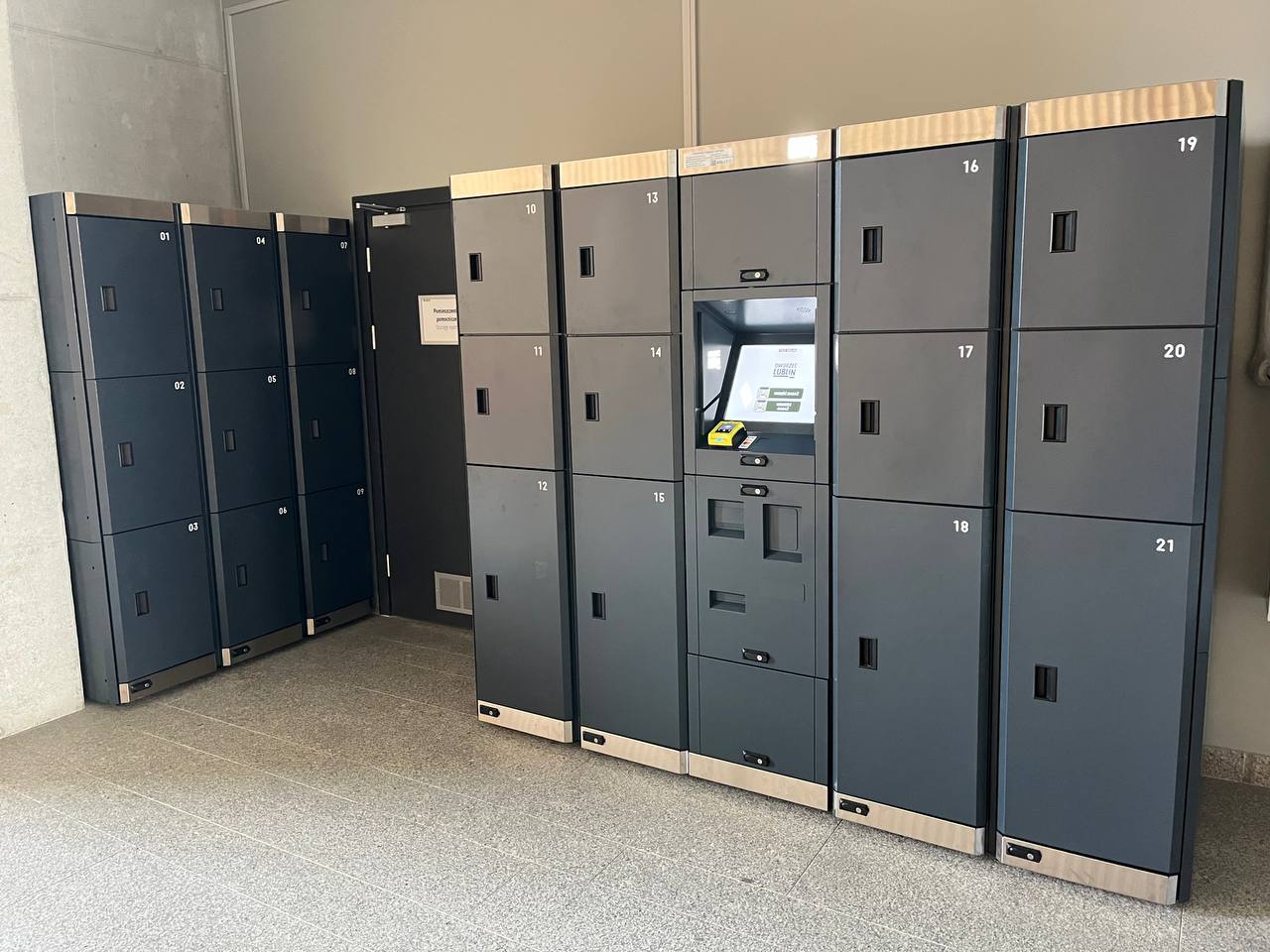
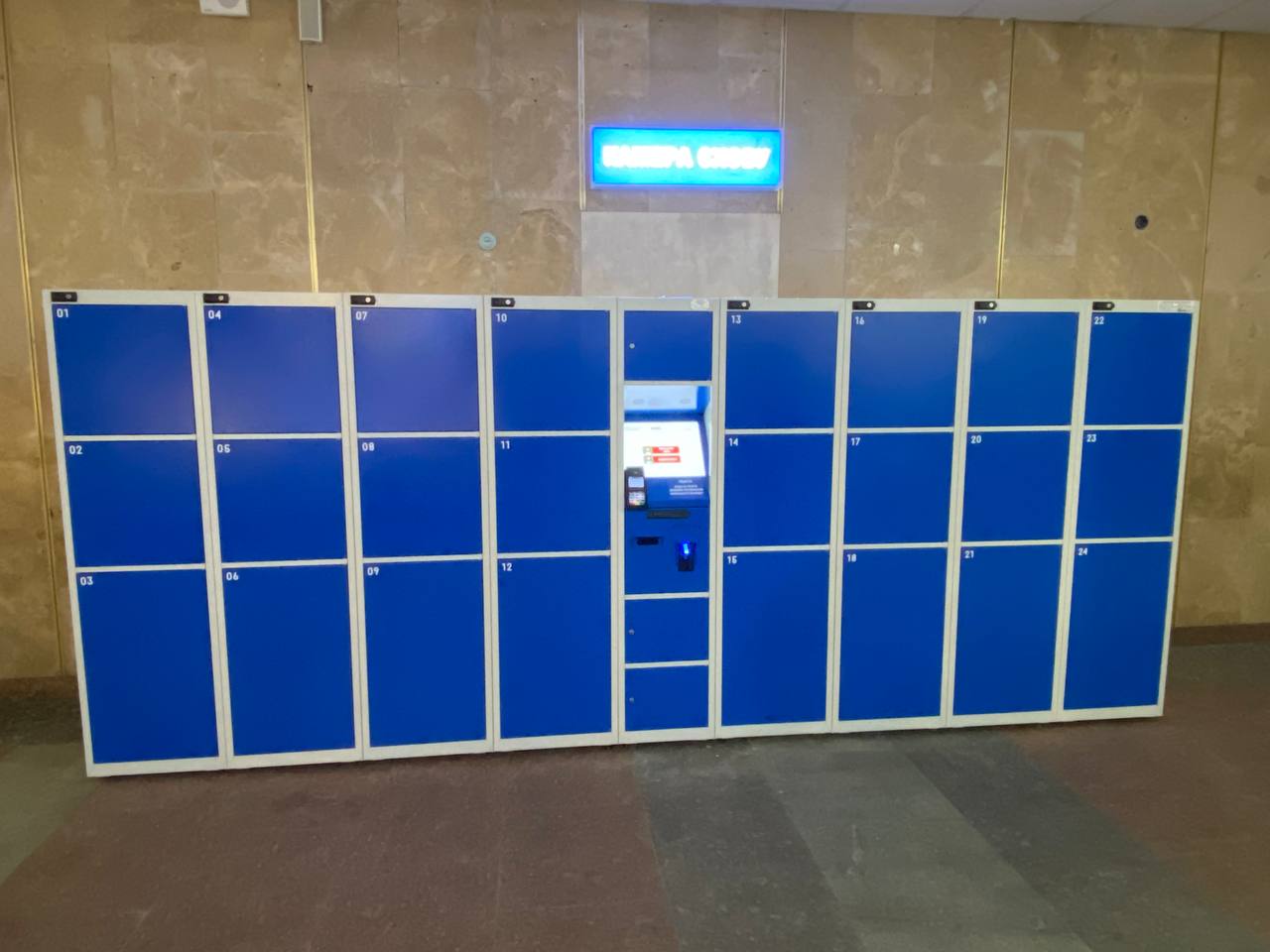
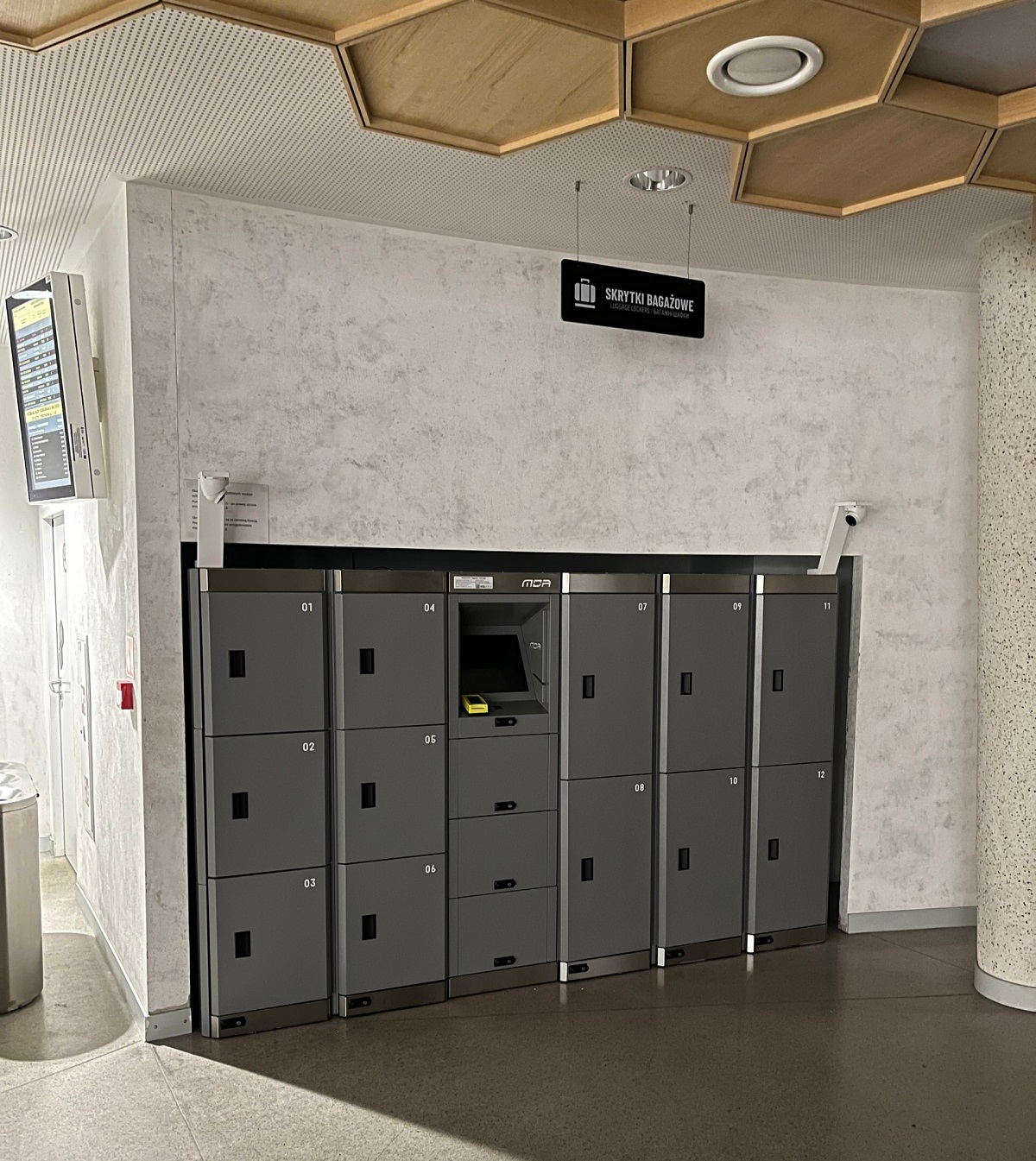
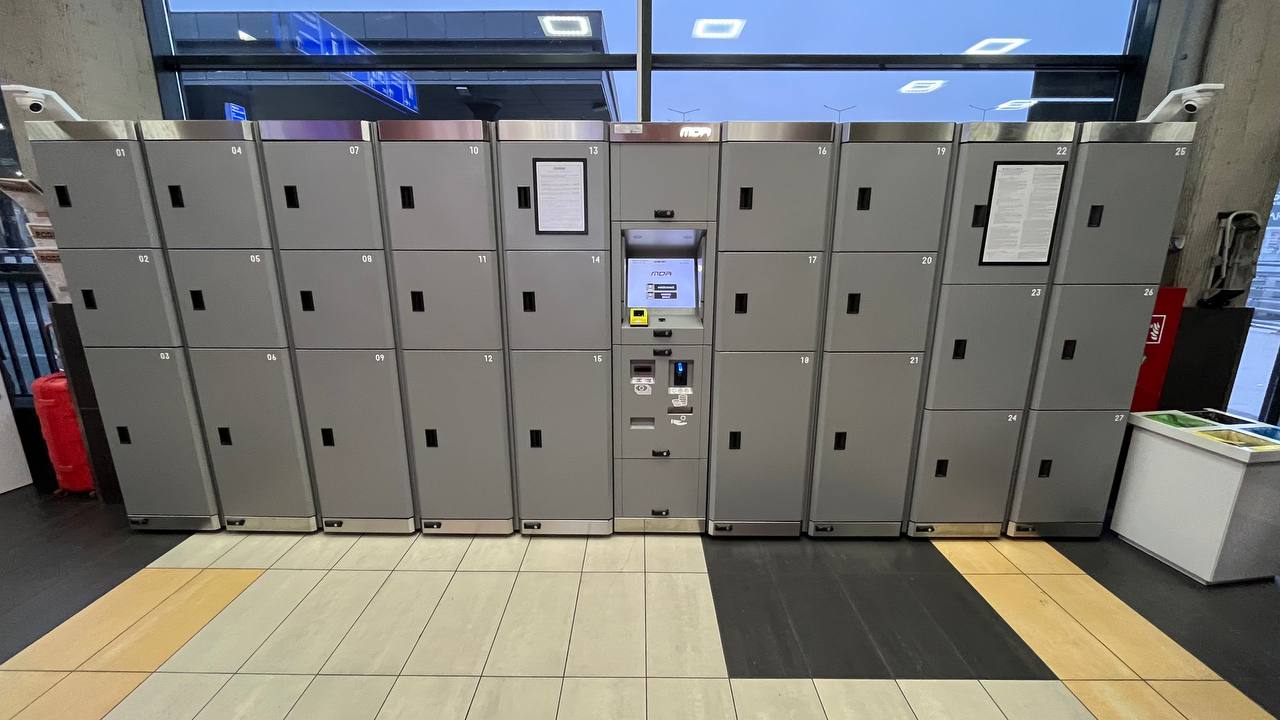
- Self-service automatic lockers. The passenger chooses a compartment, pays and receives a code or QR, or opens the compartment with a card. Advantage: 24/7 operation without staff and low running costs. Limitation: without extra measures, the operator does not know what is inside.
- Staffed left luggage office. An employee accepts the items, issues a receipt and, if needed, inspects or screens them. Maximum control, but high staff costs and queues at peak hours.
- Hybrid model. Automatic lockers are installed in a controlled area with video surveillance, and access to the area or the lockers themselves is linked to a screening point. This model combines the speed of self-service with the level of control security services require.
For Ukrainian stations under martial law, the hybrid model is currently the most realistic option: you cannot assign staff to every luggage storage point, and security services will not approve fully uncontrolled self-service.
Regulatory framework: what governs luggage lockers
Neither Ukraine nor the EU has a dedicated standard for automatic luggage lockers. The requirements come from several groups of documents, and the buyer should check the equipment against each of them.
Transport and storage rules
For railways in Ukraine, the core document is the Rules for the Carriage of Passengers, Baggage, Parcels and Mail by Rail, approved by Order No. 1196 of the Ministry of Transport and Communications of December 27, 2006. They define a left luggage facility as a specially equipped room for short-term storage of passengers' hand luggage and baggage. Detailed terms (rates, maximum storage periods, handling of unclaimed items) are set by the carrier or the station owner in their own regulations. The locker software logic (maximum period, payment extension, removal of items once the period expires) must follow these documents rather than be configured at will.
Aviation security
Ukrainian airspace has been closed to civil aviation since February 24, 2022, but airports are preparing to resume operations, and equipment for them should be designed now. As an ICAO member state, Ukraine follows Annex 17 to the Chicago Convention, which specifically requires security measures in the landside area of an airport, exactly where luggage lockers are usually placed. As part of European integration, Ukraine is aligning its aviation security legislation with Regulation (EC) No 300/2008 and Implementing Regulation (EU) 2015/1998, so airport lockers should be designed to European requirements from the start.
Electrical equipment and radio modules
An automatic luggage locker is an electrical product. In Ukraine, it falls under the technical regulations on low voltage equipment and electromagnetic compatibility, and if it has NFC, RFID, Wi-Fi or GSM modules, also under the technical regulation on radio equipment. These are harmonised with EU Directives 2014/35/EU, 2014/30/EU and 2014/53/EU. In practice, this means the manufacturer must have a declaration of conformity and the corresponding marking.
Fire safety and accessibility
Lockers must not narrow evacuation routes or block access to fire hydrants and fire panels, which follows directly from the Fire Safety Rules of Ukraine. New and reconstructed public buildings are subject to DBN V.2.2-40:2018 "Inclusiveness of Buildings and Structures. Basic Provisions" (with Amendments No. 1, 2 and 3, the latest in force since April 1, 2026). This means some compartments and the terminal must be accessible to wheelchair users: placement of controls, screen readability and clear space in front of the locker.
Personal data and payments
If the system records a phone number, a photo or ID data, the operator processes personal data and must comply with the Law of Ukraine "On Personal Data Protection", and with the GDPR for projects in the EU. Card payments require a payment terminal certified to PCI PTS and processing compliant with PCI DSS. In Ukraine, transactions must also be fiscalised in line with the legislation on cash registers (RRO).
Technical requirements for the structure
Lockers for transport hubs are made of powder-coated sheet steel. Wood and chipboard, which work well in gyms, are not suitable here because of vandalism, moisture and fire safety requirements. The critical components are:
- Doors and hinges. Concealed hinges and no gap where a lever could be inserted. Doors must be rigid enough that they cannot be bent by hand.
- Lock. An electromechanical lock that cannot be reached from the outside, with a door status sensor. The system must know not only that an "open" command was sent, but that the door actually opened and closed.
- Compartment sizes. Most airlines limit cabin baggage to around 55×40×20 cm, so the standard compartment must fit exactly this kind of suitcase. Add several compartments for large suitcases, baby strollers and sports equipment.
- Electronics protection. Indoors, an IP rating under EN 60529 that keeps out dust and splashes is usually enough. Platforms and unheated areas need a higher protection class and a wider operating temperature range.
- Burglary resistance. EN 14450 (classes S1 and S2 for secure storage units) can serve as a benchmark for burglary resistance. It is not mandatory for luggage lockers, but it is a convenient way to compare offers from different manufacturers.
Software: where real security comes from
Many manufacturers can supply a sturdy steel cabinet. The difference between an ordinary cabinet and a locker that a station's security service will approve lies mostly in the software.
- Event log. Every opening, every access attempt with a wrong code, every service opening and every failure is recorded with a timestamp and an ID. The log is stored on a server, not only in the terminal memory, and cannot be edited from the terminal itself.
- Integration. An API that sends events to the video surveillance and security systems of the facility. When a compartment opens, the operator sees the event together with the camera footage.
- Storage period control. Automatic notification when the storage period has expired, and a procedure for unclaimed items. Such a compartment should be a priority for the security service.
- Operation without power and connectivity. In Ukraine, this is a separate requirement. The system must run on a UPS, recover correctly after an outage, keep the log locally and sync it once the connection is back. A passenger must never be left without their belongings because of scheduled power cuts.
- Emergency opening. A regulated procedure for evacuation or inspection of a compartment by the security service, with a mandatory log entry showing who opened it and on what grounds.
These are exactly the requirements we build into our automatic luggage lockers for railway stations: a steel body, proprietary software with a server-side event log and integration with the facility's security systems.
Placement in the hall
Even a well-made locker becomes a problem if it is installed in the wrong place. Luggage lockers should be placed in an area fully covered by video surveillance, ideally with a view of both the terminal and the front of the compartments. They should not stand right next to load-bearing columns, near glass structures or in the path of the main passenger flow. At airports, the location should be agreed with the aviation security service at the design stage, not after the equipment has been delivered.
Buyer's checklist before procurement
- Does the manufacturer have a declaration of conformity for electrical equipment, EMC and radio equipment?
- Where is the event log stored and who has access to it?
- Is there an open API for integration with security and video surveillance systems?
- How does the system behave during power and internet outages, and how long does it run on the UPS?
- How is emergency opening implemented, and is it recorded in the log?
- Is the payment module certified, and how is fiscalisation handled?
- How many compartments are accessible to people with disabilities, and does the terminal comply with DBN V.2.2-40:2018?
- Who services the equipment and how quickly, and where are the service centre and spare parts stock located?
Service is often the last question buyers ask, yet it determines whether the lockers will still be working a year later. A manufacturer that develops both the hardware and the software can fix faults faster and adapt the system to the requirements of a specific facility.
MVK MASH has been developing and manufacturing automatic luggage lockers and its own software for them for over 15 years. If you are planning luggage storage for a railway station, bus station or airport, contact us: we will help you choose the model, the number and sizes of compartments and the integration requirements for your facility.