Why a hotel needs check-in without a front desk
A guest needs a staffed reception desk for two things: to collect a key and to leave luggage. Everything else — booking, payment, questions about the room — moved online long ago. Yet the night shift remains one of the most expensive and hardest positions to fill in a small hotel, aparthotel or hostel, and it exists almost entirely to cover those two tasks.
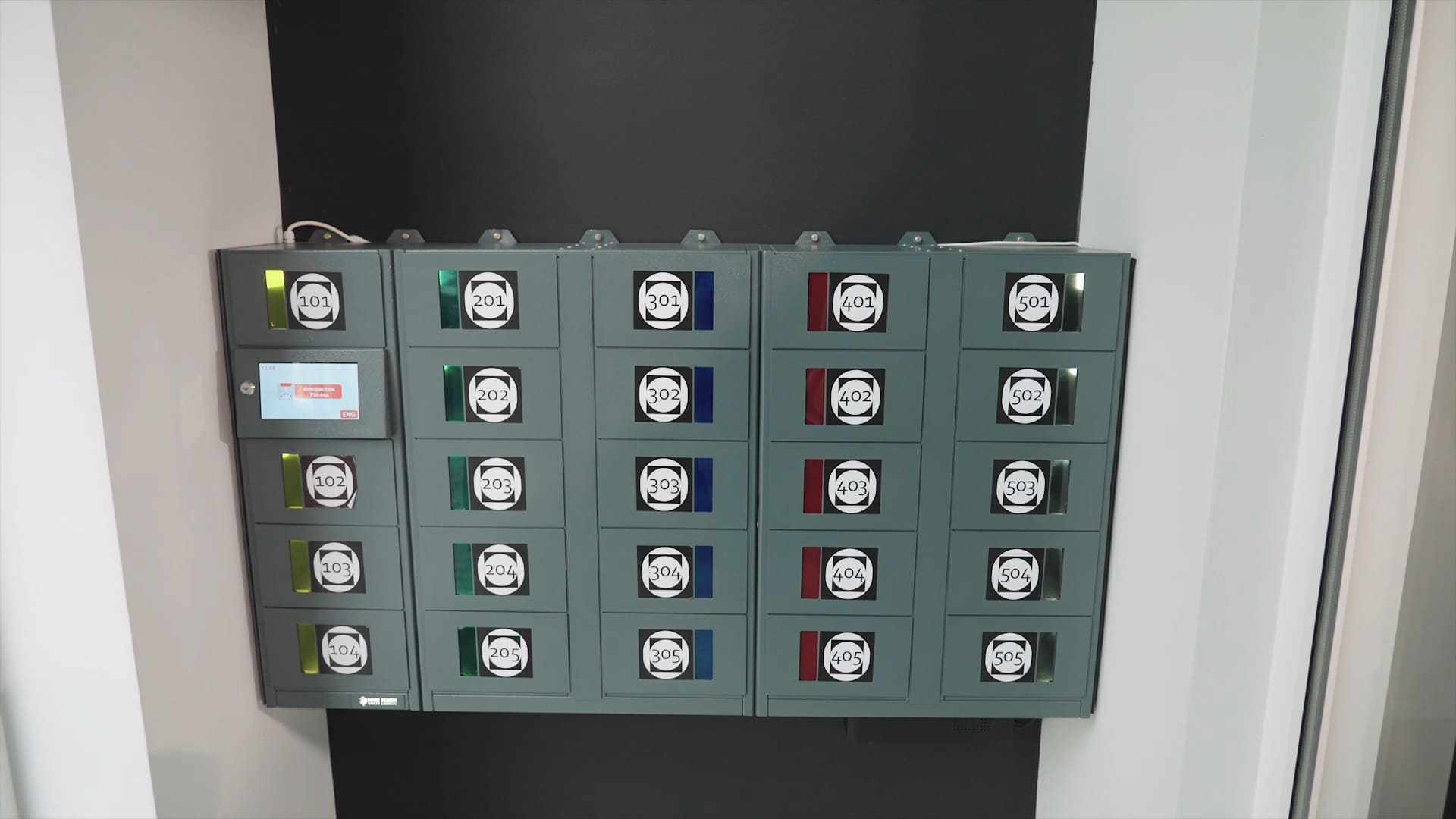
In Ukraine there are additional reasons. Trains arrive and depart at any hour, guests turn up late at night or early in the morning, and where a curfew is in force a receptionist physically cannot travel to or from a shift. Power outages mean check-in must not depend on a single computer behind the desk. An automated locker combined with a smart key cabinet covers both reception tasks: it hands over the key and accepts luggage without a member of staff.
Three jobs a cabinet in the lobby does
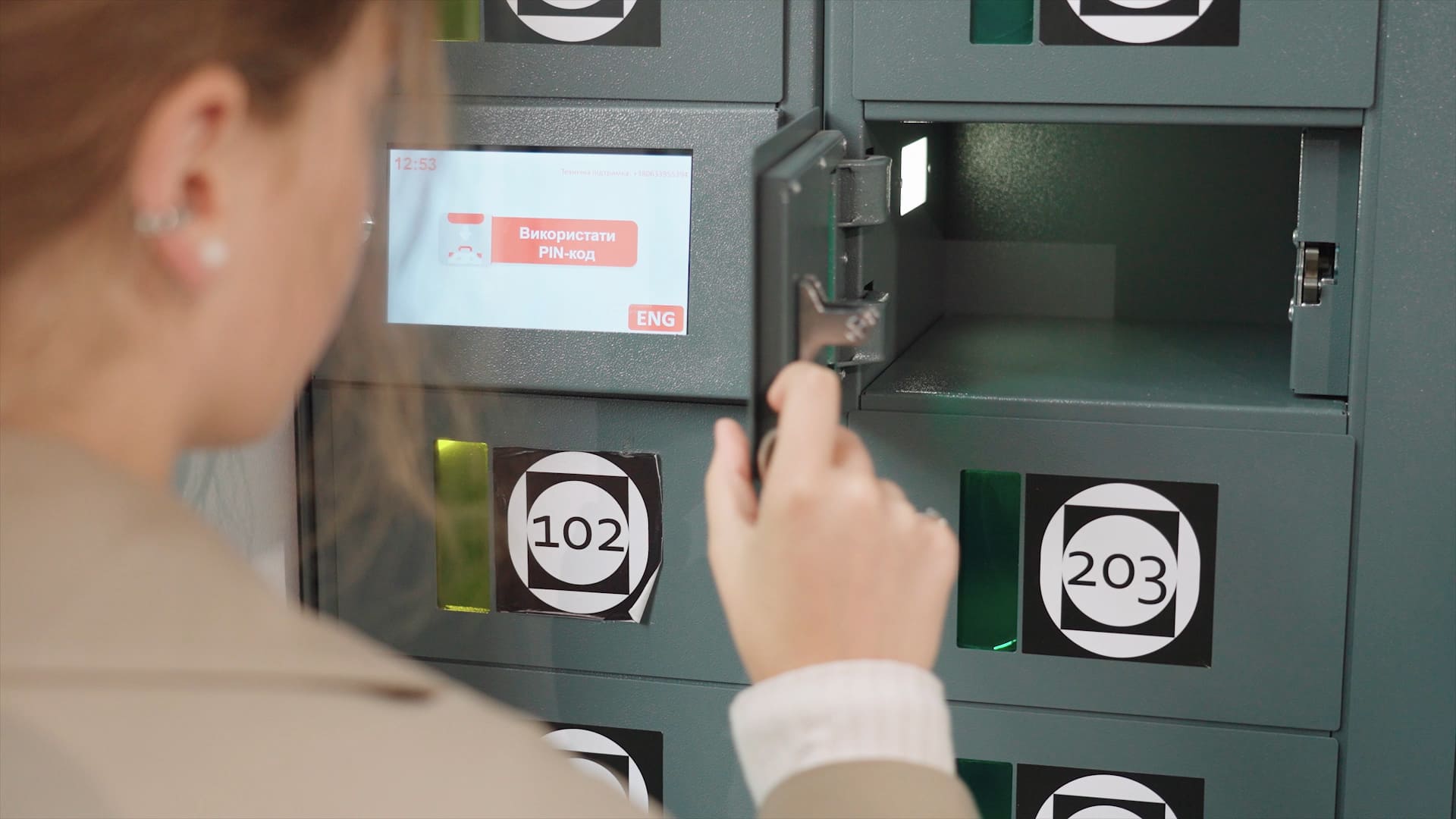
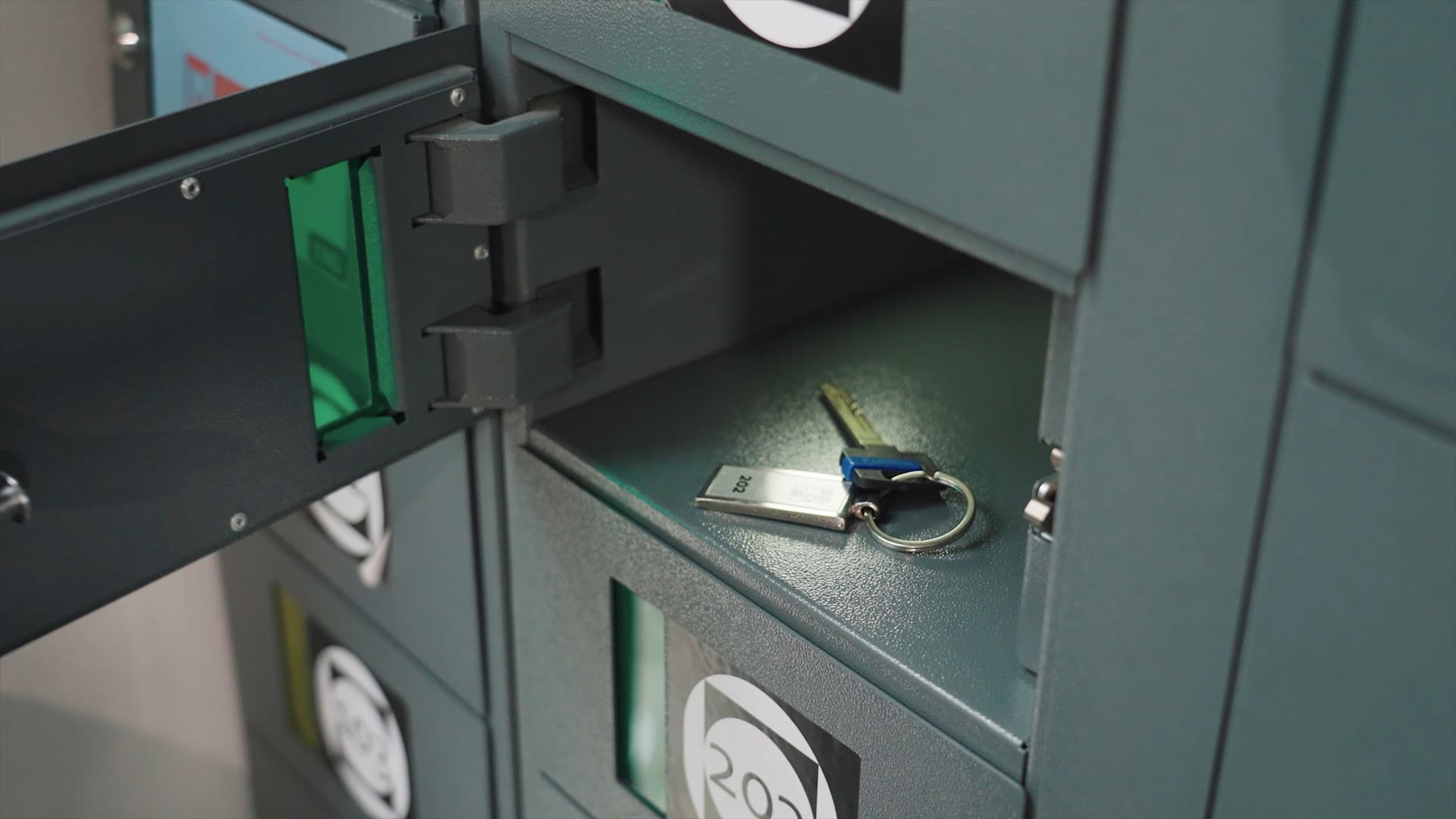
- Key handover and return. After the booking is confirmed the guest receives a code or QR, opens their compartment and takes the room key or card. On departure the key goes into a return compartment and the system records that the room has been vacated.
- Luggage storage before check-in and after check-out. A guest arrives in the morning while the room is still being cleaned, or checks out at noon with an evening train. A self-service locker removes the duty of taking bags, issuing tags and being answerable for them.
- Personal lockers for hostel guests. In shared dorms every guest needs somewhere to lock documents, a laptop and chargers. When those lockers run on the same system as key handover, one code or one card opens everything the guest is entitled to.
What contactless check-in looks like in practice
This flow works equally well in a small aparthotel and in a hostel with several dozen beds:
- The guest books a room on the hotel website or through a booking channel.
- Before arrival they complete online registration: fill in the form, confirm their identity document and pay for the stay.
- The property management system (PMS) passes the booking to the key cabinet software, which generates an access code valid only for the dates of the stay.
- The guest receives the code or QR by message, arrives at any hour and opens the compartment holding their key.
- On the day of departure the key goes into the return compartment or a dedicated drop slot. The code stops working and housekeeping sees that the room is free.
The receptionist does not disappear. They work during the day, handle non-standard situations and monitor the system remotely, but they are no longer tied to the desk at three in the morning.
Smart key cabinet or electronic door locks
The most common question from owners is why a key cabinet is needed at all if electronic locks can be fitted to every room and a digital key sent to the guest's phone. Both approaches work, but they solve the problem differently.
- Electronic door locks require replacing the hardware in every room, power or batteries in every lock and, as a rule, integration with one lock manufacturer's ecosystem. For a new build this makes sense; for an operating property it means refitting every door.
- A smart key cabinet works with the locks already installed — mechanical keys or an existing card system. One point in the lobby changes, not every door. It is faster to deploy, cheaper to implement and simpler to service, which matters especially when the building is leased and structural changes need the owner's approval.
A key cabinet also suits apartments spread across several buildings: a single terminal in an office or pickup point serves the whole portfolio. There is more detail on configurations on the page for smart key cabinets for automated key handover.
Luggage storage: where a hotel loses money and reputation
A luggage room behind the desk looks free until a claim is made. Under Ukrainian law a hotel is liable for the safekeeping of belongings brought in by a guest without any separate storage agreement, and comparable liability rules apply across most European jurisdictions. A bag a staff member took "just for a minute" and left in an unlocked back room becomes the owner's risk.
A self-service compartment changes that: only the guest has access, every opening is logged, and staff never handle other people's bags. It is also better for the guest, who no longer waits for the receptionist, hunts for a tag or explains which of several similar black suitcases is theirs.
If the hotel sits next to a station and intends to store belongings for the general public rather than its own guests only, stricter requirements apply, as for a public left-luggage facility. We covered them in detail in “Luggage lockers for railway stations and airports: requirements and standards”.
Guest identification: contactless does not mean anonymous
The main mistake when moving to self-service is handing a key to anyone who knows a booking number. Hotel regulations in Ukraine require accommodation to be registered against an identity document, and the hotel acts as a collecting agent for the tourist tax. Operators in the EU face comparable guest-registration duties. Self-service must preserve those procedures and simply move them online.
- The code is issued only after registration. Until the guest has completed the form and confirmed their details, the compartment will not open.
- The code is tied to the dates of stay. It is inactive before arrival and after departure, and is revoked automatically if the guest leaves early.
- Personal data lives in one place. Document copies and registration forms belong in the PMS or secure storage, not in the terminal's memory. Processing is governed by Ukraine's personal data protection law and, for EU guests, by the GDPR, so the guest must know what is collected and why.
Integration with the property management system
A key cabinet that runs separately from the PMS forces the receptionist to create a code manually for every booking. That is the same work moved from the desk to a computer, and it is exactly where mistakes appear: a code not sent, sent to the wrong guest, or not revoked after check-out.
So an open API and ready-made integrations matter when choosing equipment. The correct chain looks like this: a booking appears in the PMS, the cabinet software assigns a compartment and creates a code, the guest receives it in the same message as the booking confirmation, and the key-return event updates the room status for housekeeping.
Reliability requirements: what to check before buying
- Standalone operation. During a power cut the cabinet must run on a UPS, and with the internet down it must still accept codes already issued. A guest arriving at night during an outage has to get into their room.
- Event log. Every opening, wrong code, service opening and key return is recorded with an exact timestamp and stored on a server. In a dispute the hotel can show who opened a compartment and when.
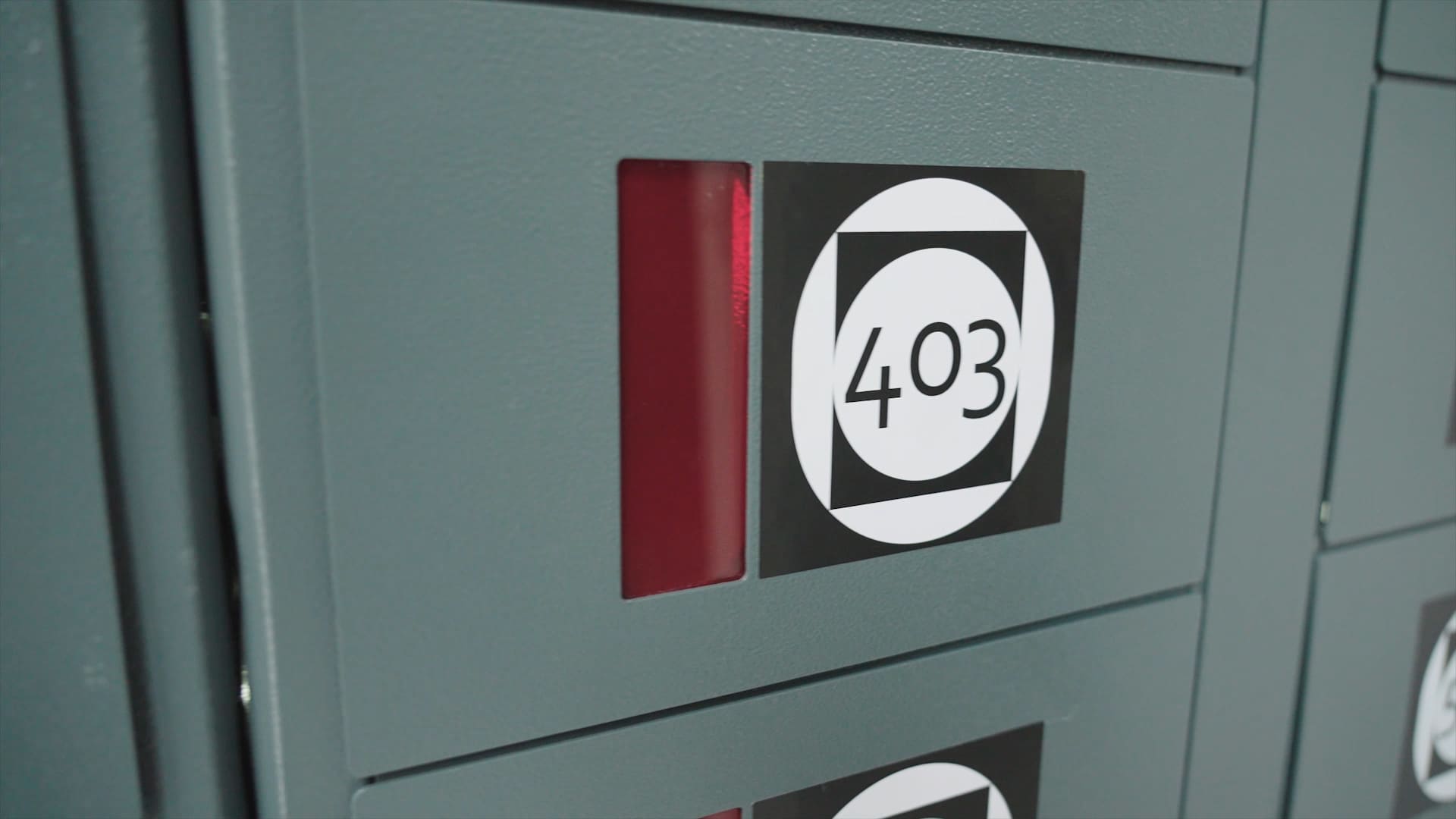
- Door sensor on each compartment. The system must know not only that a compartment was commanded to open, but that the key was taken and the door closed again. Otherwise a room key can sit in an open compartment in a shared lobby.
- Emergency access. A defined override for the manager when a guest loses the phone holding their code, with a mandatory log entry.
- Remote management. The manager or group owner sees the status of every compartment online and can issue a code, extend a stay or open a compartment remotely.
Where to install it: lobby, vestibule or outdoors
The right place for a key cabinet and lockers is an area the guest can reach around the clock but that is not open to every passer-by. Most often that is a lobby behind an entrance door with a code lock, or the entrance vestibule. The door code can be sent in the same message as the compartment code.
Compartments should sit within view of a CCTV camera and must not block an escape route. If the cabinet is installed outside the building, the body must be vandal-resistant and weatherproof, and the electronics rated for sub-zero temperatures. In a hostel with personal lockers inside dorms, the lockers must not obstruct the aisle between beds and should be reachable without waking other guests.
Hostels: a separate case
In a hostel one system can cover several tasks at once. The guest gets a single code or card that opens the entrance door, releases the room key, grants access to a personal locker by the bed and to a luggage compartment on departure day. The fewer separate keys and padlocks in circulation, the fewer losses, disputes between guests and calls on staff.
The departure scenario deserves particular attention: a locker should free itself automatically once the stay ends, and anything a guest left behind should enter a separate lost-property procedure rather than remain in the compartment for the next occupant.
Checklist before implementation
- What locks are fitted to the rooms, and do they need replacing or will a key cabinet do?
- Is there an integration with your PMS, or an open API to build one?
- How are online registration and document verification handled before a code is issued?
- How does the system behave during a power cut and an internet outage?
- Where are the event log and guests' personal data stored?
- How many compartments are needed for keys and how many for luggage, allowing for peak arrival days?
- What happens if a guest loses their code or their phone?
- Who services the equipment and how quickly can an engineer attend?
Contactless check-in works only when the hardware, the software and the hotel's own procedures are designed together. That is why it pays to work with a manufacturer that develops both the cabinets and the software: the system can be configured around a specific property instead of forcing the property to work around the limits of an off-the-shelf product.
MVK MASH has been developing and manufacturing automated luggage lockers, smart key cabinets and their software for more than 15 years. If you are planning to move a hotel, aparthotel or hostel to check-in without a front desk, get in touch: we will help you choose the configuration, the number and size of compartments and the integration approach for your booking system.